SEO vs AEO vs GEO: What Is AEO, GEO, and AI SEO in 2025 & 2026?
The digital search landscape is undergoing its largest structural transformation in over two decades. Traditional Search Engine Optimization (SEO) is rapidly converging with two critical new disciplines: Answer Engine Optimization (AEO) and Generative Engine Optimization (GEO). Whether users are asking Google AI Overviews, querying ChatGPT Search, or prompting Perplexity, ranking is no longer just about blue links—it is about becoming the verified source that artificial intelligence cites, synthesizes, and displays.
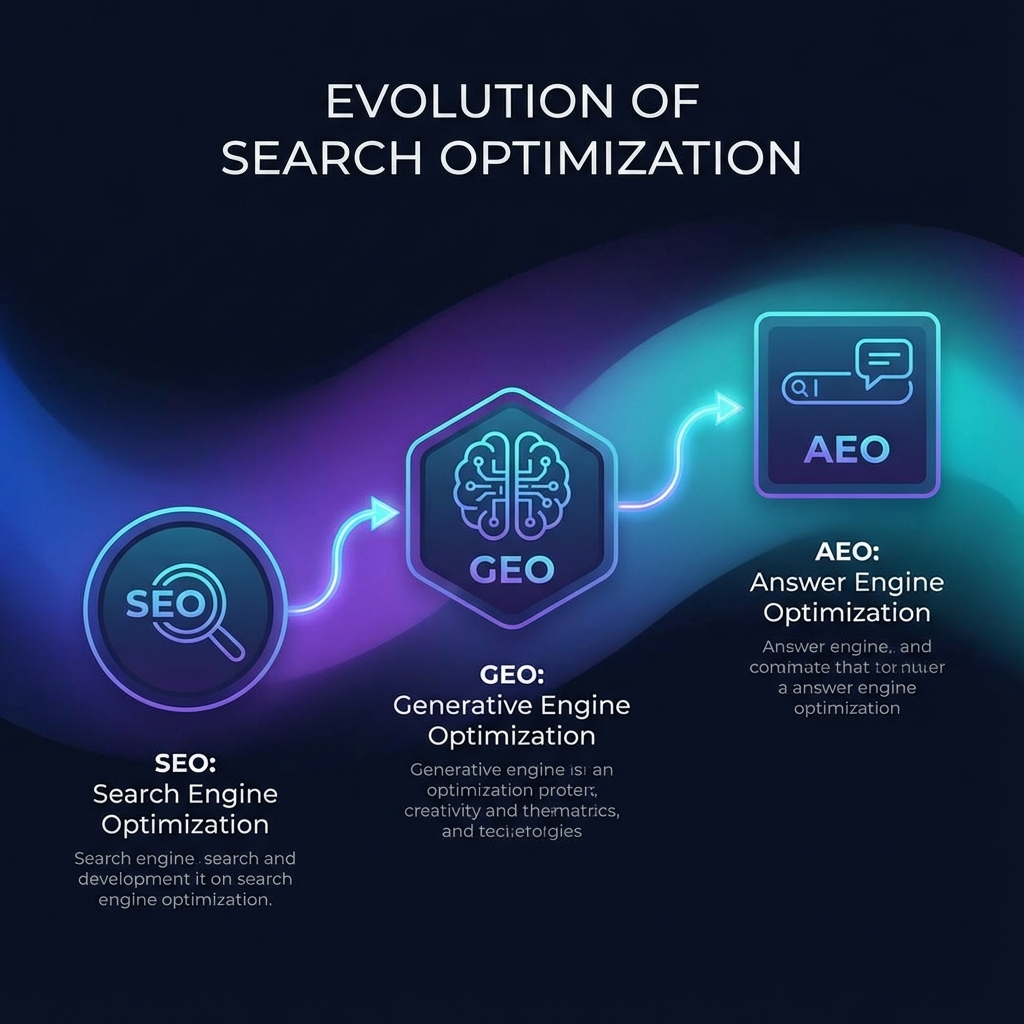
In this guide, we break down the definitive comparison of SEO vs AEO vs GEO, explain how they differ, provide concrete content examples, outline essential KPIs for AEO and GEO, and give you an actionable playbook to future-proof your organic search strategy for 2025 and 2026.
Key Takeaways & Quick Definitions
- SEO (Search Engine Optimization): Optimizing web pages to rank in traditional search engine results pages (SERPs) and generate click-through traffic.
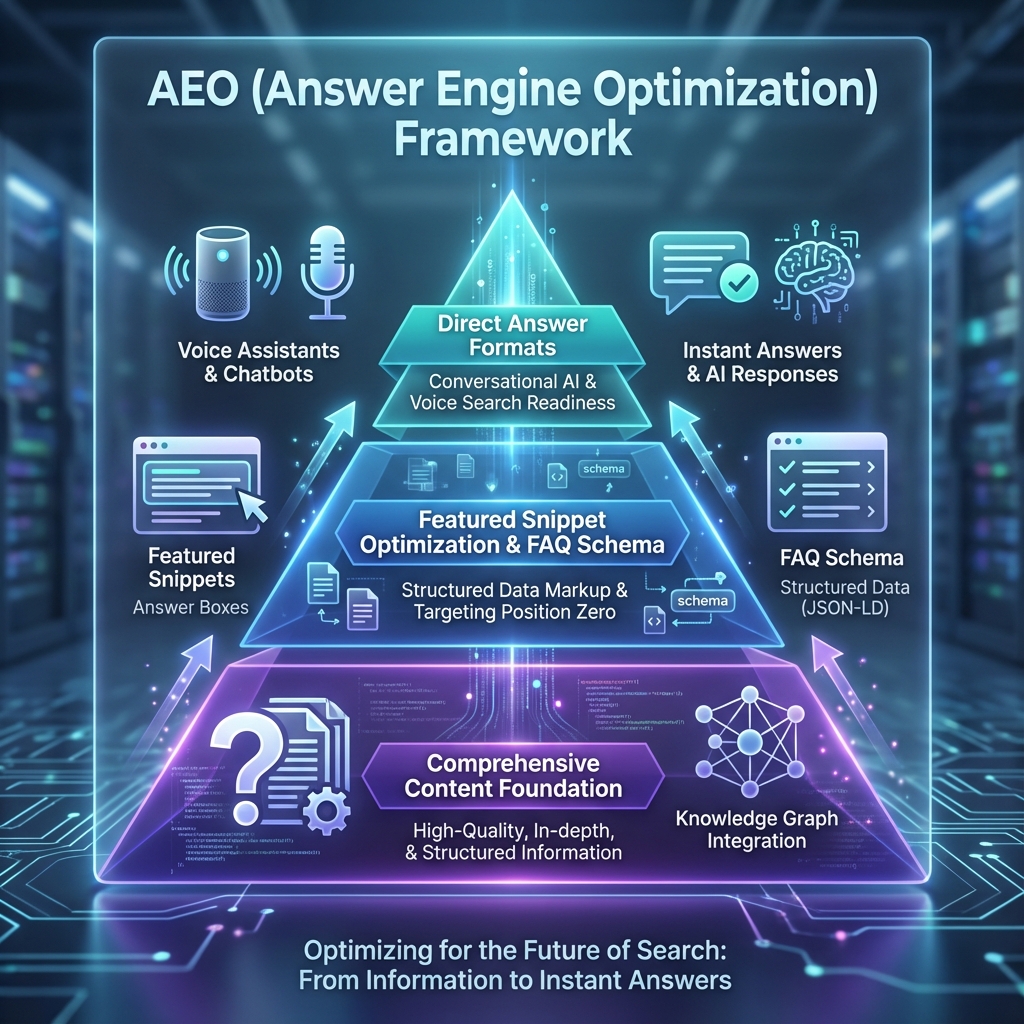
- AEO (Answer Engine Optimization): Structuring facts, direct definitions, and FAQ markup so answer engines (Google Featured Snippets, Siri, Alexa) extract your content as the single definitive answer.
- GEO (Generative Engine Optimization): Crafting authoritative, citation-rich, data-backed content that generative AI models (ChatGPT, Perplexity, Google Gemini, Copilot) synthesize into their conversational responses.
- AIO (AI Optimization / AI Overviews): The operational umbrella for optimizing content to trigger and dominate Google's multi-source AI Overviews.
- The Core Shift: Traditional SEO measures page rankings and clicks; AEO and GEO measure citations, answer extractions, and Share of Model (SoM).
SEO vs AEO vs GEO: The Definitive Comparison Matrix
Marketers frequently ask: Are AEO and GEO different things, or just buzzwords for modern SEO? While they all share the overarching goal of driving organic brand visibility, their mechanics, platforms, and success metrics differ fundamentally.
Here is how SEO vs GEO vs AEO compare side by side:
| Dimension | Traditional SEO | AEO (Answer Engine) | GEO (Generative Engine) |
|---|---|---|---|
| Primary Goal | Rank #1–#10 on SERP & maximize website click-through rate (CTR) | Win the direct answer box (Position 0), featured snippet, or voice response | Be cited, referenced, and synthesized into AI-generated answers |
| Target Platforms | Google, Bing, Yahoo, DuckDuckGo | Google Snippets, Knowledge Panels, Siri, Google Assistant, Alexa | Perplexity AI, ChatGPT Search, Google Gemini/AI Overviews, Claude |
| Content Structure | Keyword-optimized long-form articles, landing pages, metadata | Concise 40–60 word answer paragraphs, Q&A format, FAQ schema markup | Multi-perspective analysis, statistical tables, expert quotes, entity-dense depth |
| Ranking Mechanism | PageRank, backlink quantity/quality, keyword density, technical crawlability | Direct semantic match, clarity of answer, structured JSON-LD data | Vector embeddings, Retrieval-Augmented Generation (RAG), source trust, E-E-A-T |
| Primary KPIs | Keyword rank, organic sessions, bounce rate, conversion rate | Featured snippet share, zero-click answer impressions, voice query wins | AI citation rate, Share of Model (SoM), Perplexity linked references |
| User Behavior | User clicks link and browses website | User reads direct answer immediately on search engine page | User conducts conversational follow-up questions within the AI chat interface |
AEO vs GEO: Are They Really Different Things?
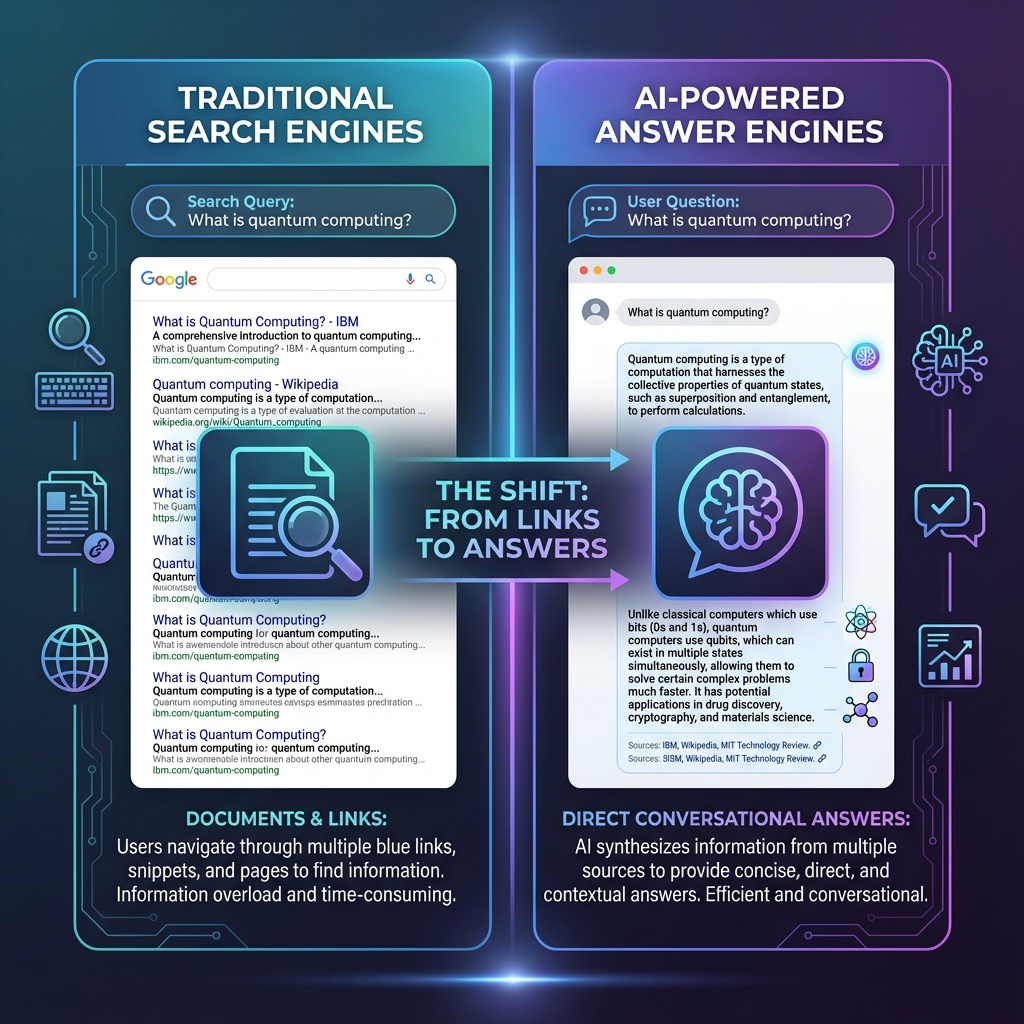
One of the most common questions in search marketing is: What is the difference between AEO and GEO? Many sources mistakenly use them interchangeably, but they serve two distinct stages of information retrieval.
1. How AEO Operates: Direct Answer Extraction
Answer Engine Optimization (AEO) is designed for deterministic, factual queries. When a user asks: "What is customer acquisition cost?" or "How to calculate marketing ROI?", the search engine doesn't need to write an essay. It extracts a single, succinct sentence or numbered list and showcases it prominently in Position 0.
AEO relies heavily on clean HTML semantic tags, Schema.org microdata (such as FAQPage and HowTo), and direct answer sentences positioned immediately under question-formatted headers.
2. How GEO Operates: Generative Synthesis & RAG
Generative Engine Optimization (GEO) is designed for complex, multifaceted, or exploratory queries. When a user asks ChatGPT or Perplexity: "Compare the top marketing budget allocation strategies for SaaS vs eCommerce startups in 2026", no single paragraph can answer the question.
The generative engine uses Retrieval-Augmented Generation (RAG) to retrieve 5 to 10 authoritative sources, vectorizes their content, and generates a fresh, synthesized answer while attaching citation footnotes. GEO is the art and science of ensuring your brand's unique data, frameworks, and expert insights are the ones the AI chooses to cite.
What About AIO and LLMO?
As AI search expands, several complementary acronyms have entered the marketing lexicon:
- AIO (AI Optimization / AI Overviews): Specifically refers to optimizing your website to appear in Google's AI Overviews (formerly SGE). AIO requires a hybrid blend: traditional organic ranking within the top 10 SERPs plus structured AEO formatting.
- LLMO (Large Language Model Optimization): Focuses on training data visibility. It involves getting your brand and domain mentioned across authoritative seed datasets (Wikipedia, Reddit, GitHub, industry whitepapers, research journals) that foundation LLMs use during pre-training and fine-tuning.
Concrete Content Examples: How to Write for SEO vs AEO vs GEO
To understand how to optimize for AEO and GEO in practice, let's examine how the exact same topic is written across all three methodologies.
Example Topic: What Is a Good Marketing ROI Ratio?
1. Traditional SEO Approach (Focus: Keyword Density & Length)
"Marketing return on investment is a crucial metric for any business looking to grow. In this article, we will discuss marketing ROI, why digital marketing return on investment matters, and how you can calculate your marketing return on investment using our free spreadsheet. Read on to learn more about the best marketing ROI strategies..."
Verdict: Buries the answer, focuses on repeated keywords, and fails to give AI models a clean extraction point.
2. AEO Approach (Focus: 40–50 Word Direct Definition for Featured Snippet)
What is a good marketing ROI?
A good marketing ROI is typically a 5:1 ratio (500%), meaning for every $1 spent on marketing, your business generates $5 in gross revenue. An exceptional ROI is 10:1 (1,000%), while a 2:1 ratio generally represents break-even after accounting for cost of goods sold (COGS) and overhead.
Verdict: Perfect for Google Featured Snippets, voice assistants, and quick answers. Clear, direct, and immediate.
3. GEO Approach (Focus: Structured Data, Original Statistics, Citation-Ready Depth)
Marketing ROI Benchmarks Across Industry Sectors (2025–2026 Analysis):
- B2B SaaS: Median marketing ROI ranges between 3.5:1 and 5.2:1, with an average Customer Acquisition Cost (CAC) payback period of 14 months.
- eCommerce & Retail: Target ROAS (Return on Ad Spend) averages 4:1, heavily influenced by customer lifetime value (LTV) repeat purchase cycles.
- Professional Services: High-ticket consultative sales commonly achieve 7:1 to 10:1 ROI due to lower marginal fulfillment costs.
Methodology Note: Based on aggregated performance data across 1,200 active campaign audits compiled by AI Digital Genius marketing benchmark studies.
Verdict: Generative models like ChatGPT and Perplexity love citing specific metrics, structured bullet points, and sourced methodologies.
KPIs for AEO and GEO: How to Measure AI Search Performance
Traditional SEO tracks rankings, impressions, and organic clicks in Google Search Console. But when search engines provide direct answers without sending a click, how do you measure success?
Here are the essential KPIs for AEO and GEO you must track:
AEO Key Performance Indicators
- Featured Snippet Win Rate: Percentage of target commercial and informational queries where your URL occupies Position 0.
- People Also Ask (PAA) Appearances: Frequency of your answers showing inside Google's expandable accordion boxes.
- Zero-Click Brand Impressions: Tracking brand impressions in Search Console that maintain high visibility despite lower click volume.
- Voice Search Answer Placement: Visibility as the primary spoken source on Siri, Google Assistant, and Alexa devices.
GEO Key Performance Indicators
- Share of Model (SoM): The percentage of AI-generated responses for your target industry prompts that recommend or cite your brand.
- Citation Footnote Rate: Number of times Perplexity AI, Copilot, or ChatGPT Search include your domain link in their reference carousel.
- Direct Conversational Traffic: Referral visits originating from
chatgpt.com,perplexity.ai, orclaude.airecorded in Google Analytics 4. - Entity Sentiment & Association: Whether AI engines accurately associate your brand with your core product category (e.g., "AI marketing plan generator").
Step-by-Step Strategy: How to Optimize for AEO and GEO in 2025 & 2026
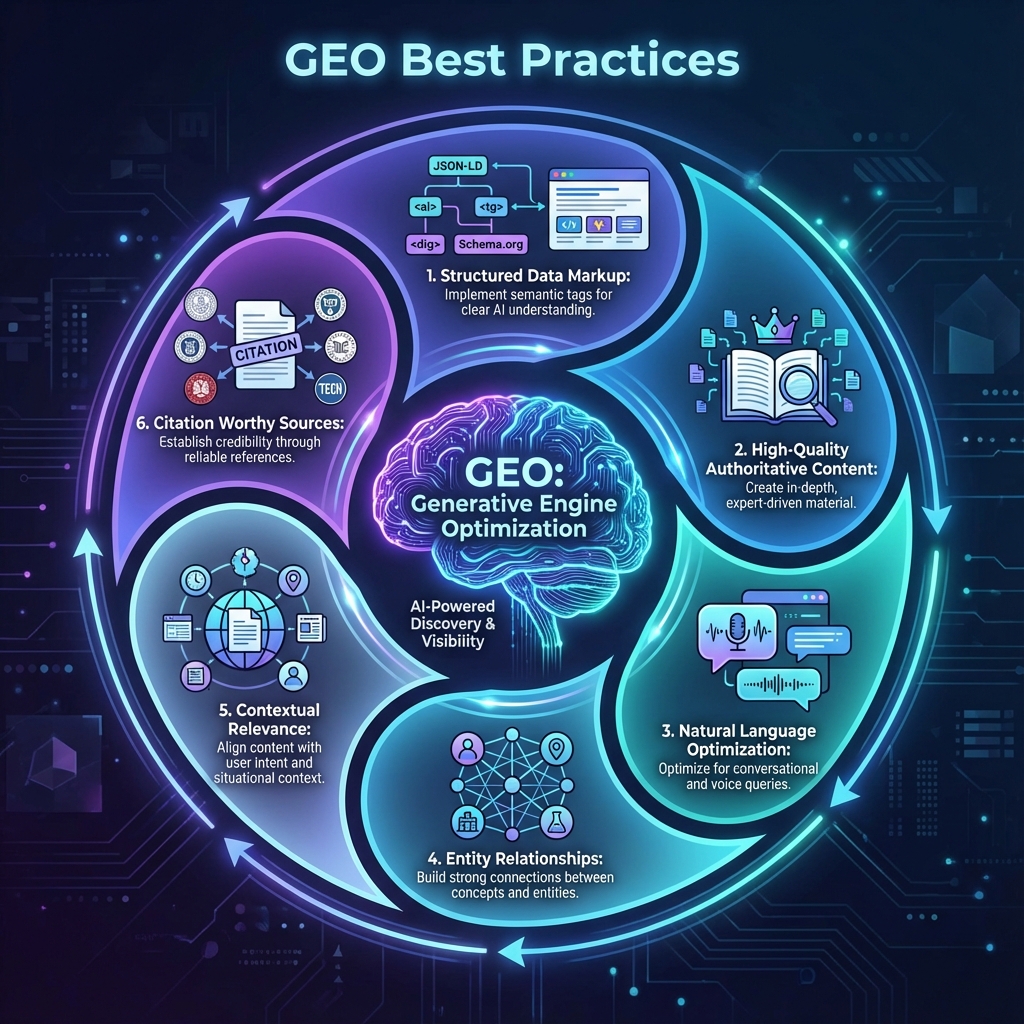
1. Restructure Content into Question-Led Hierarchies
Replace generic headings with specific, conversational questions your audience asks. For example, instead of a header named "Budget Allocation", use: "How Should Startups Allocate Their Digital Marketing Budget in 2026?"
2. Place Direct "Answer Snippets" Immediately Below Headings
Under each major heading, provide a 40 to 60-word concise answer before diving into deeper analysis. This gives search crawlers an effortless snippet to extract for AEO.
3. Use Comprehensive Schema.org Markup
Structured data is the primary bridge between human text and machine understanding. Ensure your pages implement:
ArticleandBlogPostingschema with author details and organization credibility.FAQPageschema for all frequently asked question accordions.WebApplicationschema for interactive online software and generators (such as our Free AI Marketing Plan Generator).- Structured data syntax validation using our Free JSON Toolkit and JSON Specification Guide.
HowToschema for step-by-step instructional guides.
4. Incorporate Original Data, Tables, and Statistics
Generative AI engines crave factual grounding. Articles that contain original survey findings, comparative benchmark tables, and specific numerical percentages receive up to 3.2x more citations in Perplexity and Google AI Overviews than generic opinion pieces.
Essential Tools for AEO and GEO Monitoring
Traditional tools like Ahrefs and Semrush are starting to add AI overview tracking, but dedicated AEO/GEO analysis requires specialized workflows:
- Perplexity AI & ChatGPT Search: Manually benchmark your brand's presence across 20 core commercial prompts weekly. Note which competitors are cited and what sources the AI references.
- Google Search Console (Filter by Search Appearance): Monitor queries generating impressions under "Good Page Experience" and featured snippets.
- Google Analytics 4 Referral Segmentation: Create custom channel groups for AI engines (traffic from
android-app://com.google.android.googlequicksearchbox,perplexity.ai, andchatgpt.com). - AI Blog & Content Generators: Use automated assistance tools like our AI Blog Generator to draft comprehensive outlines and topical cluster structures that satisfy search intent.
Conclusion: The Future Belongs to Hybrid Search Strategy
The battle for search visibility is no longer a choice between SEO vs AEO vs GEO. Winning brands in 2025 and 2026 are deploying an integrated hybrid search model:
- SEO builds the technical foundation, crawlable architecture, and backlink authority.
- AEO captures zero-click answers, voice queries, and featured snippets.
- GEO guarantees your brand is cited and synthesized when users turn to generative AI for buying decisions.
By implementing structured data, clear answer summaries, and authoritative original research today, your brand will dominate both traditional search engine rankings and next-generation AI answers.
Frequently Asked Questions About SEO, AEO, and GEO
What is the difference between SEO, AEO, and GEO?
Traditional SEO optimizes web pages to rank in search engine results pages and generate site clicks. AEO (Answer Engine Optimization) structures content to win direct, zero-click answer boxes and voice search snippets. GEO (Generative Engine Optimization) crafts authoritative, citable content that generative AI models like ChatGPT and Perplexity synthesize into multi-source answers.
Are AEO and GEO different things, or the same?
AEO and GEO are distinct disciplines. AEO focuses on single-source fact extraction (e.g., featured snippets or Siri voice answers). GEO focuses on multi-source synthesis, where generative AI engines vectorize and blend information from multiple web sources to craft comprehensive conversational responses.
What are the most important KPIs for AEO and GEO?
For AEO, key metrics include Featured Snippet win rates, People Also Ask (PAA) appearances, and voice query visibility. For GEO, primary KPIs include Share of Model (SoM), AI citation footnote rates in Perplexity/ChatGPT, and direct referral traffic from AI platforms.
How do you optimize content for AEO and GEO?
To optimize for both AEO and GEO: 1) Structure headers as natural questions, 2) Place concise 40-60 word answers directly beneath headers, 3) Implement Schema.org structured data (FAQPage, HowTo, Article), 4) Include data tables, original statistics, and clear expert definitions, and 5) Build strong topical authority across connected cluster articles.
What is AIO in search marketing?
AIO stands for Artificial Intelligence Optimization or AI Overviews optimization. It specifically refers to formatting content so it triggers and appears prominently within Google's integrated AI Overviews at the top of standard search results.
Will traditional SEO die because of AEO and GEO?
No, traditional SEO is not dying—it is evolving. AI engines and answer bots still rely on search engine crawlability, mobile responsiveness, site speed, and domain trust to discover and validate sources. Traditional SEO serves as the foundational infrastructure upon which AEO and GEO strategies succeed.
Written & Reviewed by Soban Raheel
Founder & Lead StrategistSoban Raheel builds web developer utilities, SEO automation workflows, and data-driven marketing frameworks at AI Digital Genius. Every guide is tested against live search console metrics, RFC/W3C specifications, and practical small-business workflows before publication.
Expert Resources & References
Ready to Create Your Marketing Plan?
Use our free AI-powered marketing plan generator to create a comprehensive, data-driven marketing strategy tailored to your business.
Generate Your Marketing Plan