How to Build SEO Topical Clusters With an AI Blog Generator (Pillar & Spoke Guide)
Quick Answer: How to Build an SEO Topical Cluster
An SEO topical cluster consists of one comprehensive pillar page (covering a broad core topic in depth) connected via contextual internal links to 5–10 supporting spoke articles (each answering one specific long-tail search query). Using our Free AI Blog Generator alongside our SEO Content Writing Guide, you can map search intent, draft non-overlapping cluster posts, and interlink every spoke back to the pillar page to build durable topical authority.
In the ever-evolving landscape of digital marketing, SEO strategy plays a crucial role in determining the online presence of a brand.
One effective way to enhance your SEO strategy is by creating topical clusters, which involve grouping related content around a central topic.
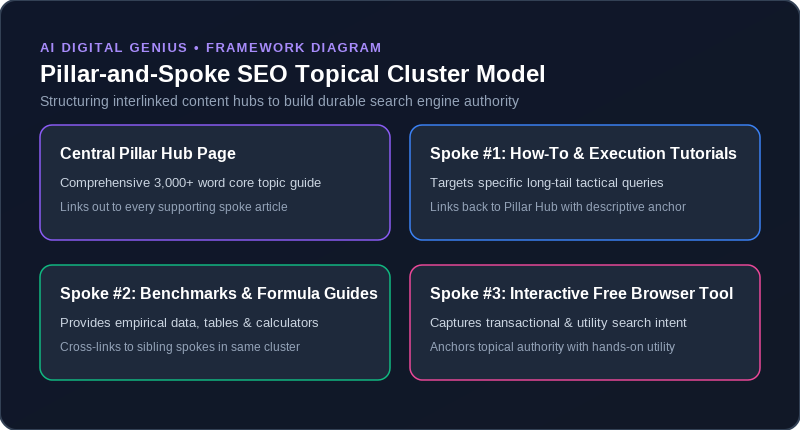
Utilizing an AI blog generator can streamline the process of content creation, allowing you to produce high-quality, relevant content that resonates with your audience.
By integrating topical clusters into your content creation process, you can improve your website's visibility and drive more traffic to your site.
Key Takeaways
- Topical clusters enhance your SEO strategy by organizing content around central topics.
- An AI blog generator streamlines content creation, producing high-quality content.
- Integrating topical clusters improves website visibility and drives traffic.
- Effective content creation is crucial for a successful SEO strategy.
- Using topical clusters can significantly boost your online presence.
What Are Topical Clusters and Why They Matter
Topical clusters are not just a content trend; they are a fundamental approach to building topical authority and improving SEO outcomes. At their core, topical clusters involve creating a network of interconnected content that revolves around a central topic or "pillar."
This strategic content arrangement helps search engines understand the breadth and depth of a website's knowledge on a particular subject, thereby enhancing its credibility and visibility.
The Structure of Effective Content Clusters
An effective content cluster consists of a comprehensive pillar page that serves as the main hub, linked to and from several related cluster articles or subtopics. This structure creates a robust content ecosystem that:
- Demonstrates expertise on a broad topic
- Provides detailed insights into subtopics
- Facilitates a clear navigation path for both users and search engines
SEO Benefits of Topical Authority
Establishing topical authority through content clusters offers significant SEO benefits, including improved rankings for a wider range of relevant keywords. By demonstrating a comprehensive understanding of a topic, websites can:
- Increase their visibility in search engine results pages (SERPs)
- Enhance their credibility and trustworthiness
- Drive more targeted traffic to their site
By leveraging topical clusters, businesses can create a content strategy that not only resonates with their audience but also aligns with the evolving algorithms of search engines, ultimately leading to sustained online success.
The Evolution of Free AI Blog Generators
The development of AI writing technology has transformed the way we approach blog content generation. As we explore the evolution of free AI blog generators, it's essential to understand the underlying technology and its implications for content creation.
How Modern AI Writing Technology Works
Modern AI writing technology relies on complex algorithms and natural language processing (NLP) to generate high-quality content. These systems are trained on vast datasets, enabling them to learn patterns and structures of language. As AI blog generators continue to evolve, they become more adept at producing coherent and contextually relevant content.
Modern large language models excel at synthesizing outlines and subtopic coverage, making human editorial review, proprietary data tables, and first-hand examples the primary differentiators in search rankings.
Capabilities and Limitations of AI Content Creation
AI content creation has several capabilities, including the ability to generate content at scale, improve efficiency, and enhance creativity. However, it also has limitations, such as the potential for bias in AI-generated content and the need for human oversight to ensure quality and accuracy.
- Capabilities:
- Generating content quickly and efficiently
- Improving content consistency
- Enhancing creativity through suggestions
- Limitations:
- Potential for bias in AI-generated content
- Need for human oversight to ensure quality
- Limited understanding of nuanced contexts
The Role of Human Oversight
Human oversight is crucial in AI-generated content to ensure that it meets the required standards of quality, accuracy, and relevance. Google Search Central's official guidance on AI-generated content emphasizes that automation should support—never replace—original human expertise and editorial review:
"Focus on the quality of your content, rather than how content is produced. Content that demonstrates first-hand experience, expertise, authoritativeness, and trustworthiness (E-E-A-T) is what search systems aim to reward."
Human editors play a vital role in reviewing AI-generated content, making necessary adjustments, and ensuring that the final output aligns with the desired tone and style.
By combining the strengths of AI technology with human oversight, content creators can produce high-quality, engaging content that resonates with their target audience.
Planning Your Topical Cluster Strategy
The key to a successful topical cluster lies in careful planning and strategic content organization. A well-planned strategy ensures that your content is cohesive, authoritative, and optimized for search engines.
Identifying Your Core Topic and Subtopics
To start, you need to identify your core topic and related subtopics. Your core topic should be broad enough to generate multiple content pieces but focused enough to maintain relevance. For instance, if your core topic is "sustainable living," your subtopics could include "zero-waste home," "eco-friendly products," and "sustainable fashion."
- Use tools like Google Trends or Keyword Planner to identify popular topics in your niche.
- Analyze your competitors' content to find gaps and opportunities.
- Brainstorm a list of subtopics that are relevant to your core topic.
Keyword Research for Cluster Content
Effective keyword research is crucial for creating a topical cluster that resonates with your audience and ranks well on search engines. Use keyword research tools to identify relevant terms and phrases for your core topic and subtopics.
Consider the search intent behind your keywords and group them accordingly. This will help you create content that meets the needs of your audience.
Creating a Content Hierarchy Map
A content hierarchy map is essential for organizing your topical cluster. It visually represents the relationship between your core topic, subtopics, and individual content pieces.
- Start with your core topic at the top of the hierarchy.
- List your subtopics below the core topic, branching out as necessary.
- Identify the type of content (e.g., blog post, video, infographic) that will be created for each subtopic.
Worked Example: Pillar-and-Spoke Cluster Architecture
Before generating articles, map out how your pillar page and spoke posts divide search intent so no two URLs compete for the same keyword (keyword cannibalization). Here is a real-world topical cluster blueprint from our own JSON Toolkit and Marketing Strategy Hub:
| Cluster Role | Example Page / Route | Primary Search Intent | Internal Linking Rule |
|---|---|---|---|
| Pillar Hub | SEO Content Writing Guide | Broad overview of SEO writing, keyword research & on-page optimization | Links out to every supporting spoke article in the cluster |
| Spoke #1 (How-To) | How to Write an SEO Blog Post | Step-by-step execution from a single target keyword to draft | Links back to Pillar Hub + sibling spokes with descriptive anchors |
| Spoke #2 (Scaling) | Boost Organic Traffic with AI Blog Posts | Editorial E-E-A-T quality control & organic traffic measurement | Links to Pillar Hub + AI Blog Generator |
| Spoke #3 (AI Search) | SEO vs AEO vs GEO Guide | Optimizing cluster answers for Featured Snippets & AI citations | Connects traditional topical authority with generative search |
Top AI Tools for Creating Content Clusters
Content creators are increasingly turning to AI blog generators to develop robust topical clusters efficiently. These tools offer a range of features that can significantly enhance content creation processes.
ChatGPT: Features and Cluster Applications
ChatGPT is a versatile AI tool developed by OpenAI, capable of generating human-like text based on the input it receives. For content clusters, ChatGPT can be used to create detailed subtopic content, supporting the main pillar article.
Its applications include drafting initial versions of cluster content, suggesting related topics, and even assisting in research by providing relevant information.
Jasper AI Free Trial: Capabilities for Topic Clusters
Jasper AI offers a free trial that allows users to explore its capabilities in generating high-quality content for topic clusters. Jasper AI is known for its ability to produce engaging, well-structured articles.
The tool can be particularly useful for creating initial drafts of pillar content and supporting articles within a cluster.
Copy.ai: Strengths for Supporting Content
Copy.ai is another AI-powered content generation tool that excels in producing supporting content for topical clusters. It offers a range of templates and can generate content in various tones and styles.
Its strengths lie in creating concise, engaging content that can be used to supplement pillar articles and enhance the overall cluster.
Rytr: Benefits for Quick Cluster Expansion
Rytr is a user-friendly AI blog generator that offers a free version, making it accessible for content creators looking to expand their topical clusters quickly. Rytr can generate a variety of content types, from blog posts to social media updates.
Its benefits include rapid content generation and the ability to produce content in multiple formats, aiding in the diversification of cluster content.
WriteSonic: Advantages for Pillar Content
WriteSonic is an AI tool that stands out for its ability to generate high-quality pillar content. It offers features like content expansion and optimization suggestions.
The advantages of using WriteSonic for pillar content include its ability to produce comprehensive, well-structured articles that can serve as the foundation for a topical cluster.
| AI Tool | Primary Use | Key Features |
|---|---|---|
| ChatGPT | Subtopic Content | Human-like text generation, research assistance |
| Jasper AI | Pillar Content | High-quality article generation, content templates |
| Copy.ai | Supporting Content | Concise content generation, tone and style variety |
| Rytr | Cluster Expansion | Rapid content generation, multiple content formats |
| WriteSonic | Pillar Content | Comprehensive article generation, content optimization |
Setting Up Your Free AI Blog Generator for Cluster Creation
A well-configured AI blog generator is the backbone of a successful content cluster strategy. Proper setup ensures that your content is consistent, relevant, and optimized for search engines.
Configuring AI Settings for Consistent Output
To achieve consistent output from your AI blog generator, you need to configure its settings carefully. This includes setting the tone, style, and language preferences to match your brand voice. Consistency is key to maintaining a professional image across your content cluster.
Most AI blog generators allow you to adjust parameters such as content length, keyword density, and readability scores. For instance, you can set the AI to produce articles with a Flesch-Kincaid grade level of 8-9, ensuring they're accessible to your target audience.
Creating Templates for Different Cluster Components
Creating templates for different components of your content cluster can significantly streamline your content creation process. Templates help maintain uniformity across your cluster, making it easier for readers to navigate and understand your content.
For example, you can create separate templates for pillar pages, subtopic articles, and supporting content. Each template can be designed to include specific sections, such as introductions, key points, and calls to action, ensuring that your content is structured and comprehensive.
By configuring your AI blog generator correctly and utilizing templates, you can efficiently produce high-quality content that supports your topical authority.
Developing Comprehensive Pillar Content with AI
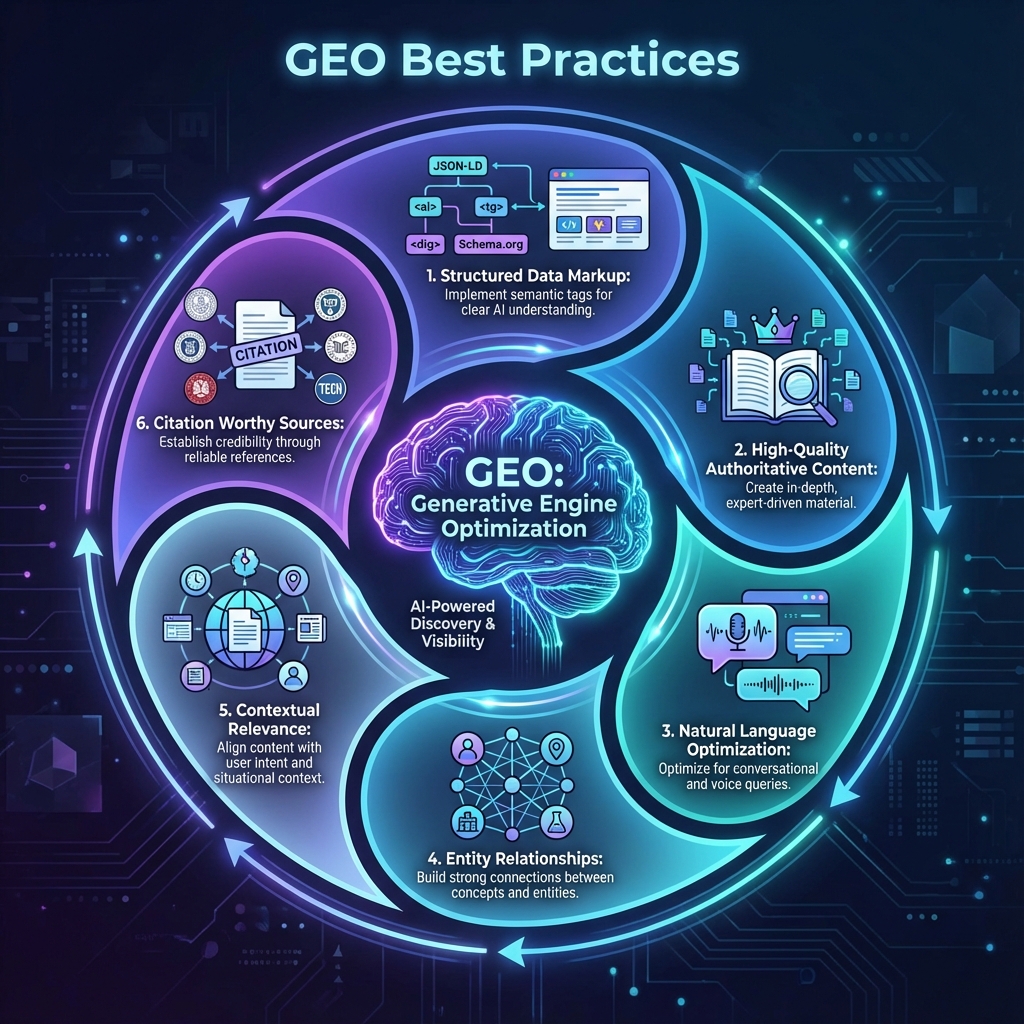
Creating comprehensive pillar content is crucial for establishing topical authority in the digital landscape. Pillar content serves as the foundation of a content cluster strategy, providing in-depth information on a core topic. With the help of AI, developing high-quality pillar content has become more efficient and effective.
Structuring In-Depth Pillar Posts
Structuring pillar content requires a strategic approach to ensure it is comprehensive and engaging. AI can assist in organizing the content into logical sections, making it easier for readers to navigate.
Essential Elements of Strong Pillar Content
Strong pillar content should include detailed explanations, relevant examples, and up-to-date statistics. These elements help to establish credibility and authority on the topic.
Using AI to Expand Core Concepts
AI can be used to expand on core concepts by providing additional insights and related information. This can help to create a more comprehensive resource that addresses various aspects of the topic.
| Content Element | Description | AI Contribution |
|---|---|---|
| Detailed Explanations | In-depth analysis of the topic | AI can help generate detailed explanations based on existing content |
| Relevant Examples | Illustrations to support key points | AI can suggest relevant examples or case studies |
| Up-to-date Statistics | Current data to reinforce arguments | AI can assist in finding and incorporating the latest statistics |
Optimizing Pillar Content for Search Intent
Optimizing pillar content for search intent involves understanding what users are looking for when they search for specific keywords. AI can help analyze search intent and suggest optimizations to improve the content's visibility in search results.
By leveraging AI in the development of pillar content, businesses can create high-quality, engaging content that resonates with their target audience and improves their search engine rankings.
Creating Supporting Cluster Content at Scale
To build a robust topical cluster, creating supporting content at scale is crucial. This involves producing a large volume of high-quality, relevant content that supports the main pillar content. AI-powered content generation tools can significantly aid in this process by automating the creation of supporting articles, blog posts, and other content formats.
Maintaining Topical Relevance Across Articles
One of the key challenges in creating cluster content at scale is maintaining topical relevance across all articles. To achieve this, it's essential to:
- Develop a comprehensive content strategy that outlines the core topics and subtopics
- Use keyword research tools to identify relevant terms and phrases
- Create a content calendar to ensure consistency in publishing
Diversifying Content Formats Within Your Cluster
Diversifying content formats within your cluster can help cater to different audience preferences and improve engagement. Some effective content formats to consider include:
- In-depth guides and eBooks
- Infographics and visual content
- Videos and podcasts
- Case studies and success stories
Using AI to Generate Complementary Perspectives
AI can be leveraged to generate complementary perspectives on a topic, enhancing the overall depth and value of your cluster content. This can be achieved by:
- Using AI to analyze existing content and identify gaps
- Generating alternative viewpoints or counterarguments
- Creating content that addresses different stages of the buyer's journey
By implementing these strategies, you can create a comprehensive and diverse cluster content ecosystem that supports your topical authority and enhances your SEO efforts.
Implementing an Effective Interlinking Strategy
Implementing an effective interlinking strategy can significantly enhance the visibility and credibility of your content clusters. A well-structured interlinking approach helps search engines understand the relationship between different pieces of content within your topical cluster, improving your site's overall SEO performance.
Internal Linking Best Practices for Clusters
To maximize the benefits of interlinking, it's essential to follow best practices. Use descriptive anchor text that indicates the content of the linked page. Avoid using generic phrases like "click here" or "learn more." Instead, opt for specific keywords that describe the linked content.
- Use a consistent linking structure throughout your cluster.
- Link to relevant and related content within your cluster.
- Avoid over-linking; prioritize quality over quantity.
Using AI to Identify Linking Opportunities
AI can be a valuable tool in identifying potential linking opportunities within your content cluster. By analyzing your content and identifying relevant links, AI can help streamline the interlinking process. AI algorithms can quickly scan through large volumes of content, suggesting links that might not be immediately apparent to human editors.
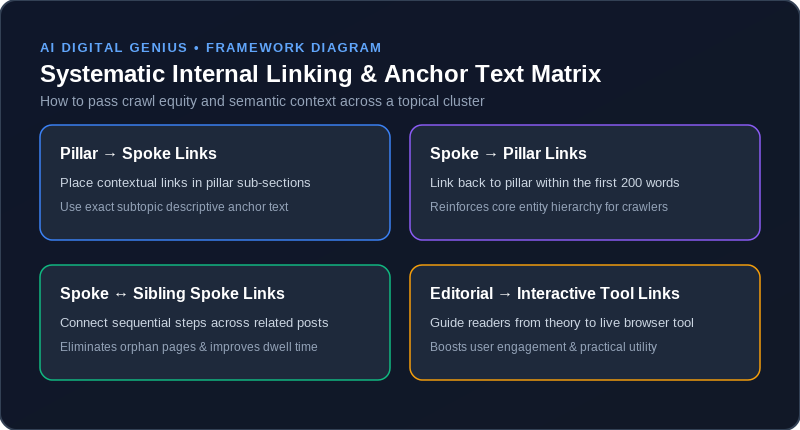
Creating a Systematic Interlinking Process
Developing a systematic interlinking process ensures consistency across your content cluster. This involves creating a set of guidelines or a checklist that outlines how interlinking should be handled. A systematic approach helps maintain the integrity of your interlinking strategy over time.
| Interlinking Aspect | Best Practice | AI Assistance |
|---|---|---|
| Anchor Text | Use descriptive keywords | AI can suggest relevant keywords |
| Linking Structure | Maintain consistency | AI can analyze and recommend structures |
| Link Quality | Prioritize relevance and quality | AI can help identify high-quality links |
By implementing these strategies, you can create a robust interlinking framework that enhances your topical cluster's SEO performance and user experience.
Quality Control for AI-Generated Cluster Content
Ensuring quality control for AI-generated content is crucial for maintaining the integrity of your topical clusters. While AI blog generators can produce high-quality content, they are not perfect and require careful oversight.
To achieve high-quality AI-generated content, it's essential to implement a robust quality control process. This involves several key steps, including human editing, factual accuracy checks, and ensuring consistency with your brand voice.
Human Editing Workflow for AI Content
A human editing workflow is vital for reviewing and refining AI-generated content. Editors can review the content for clarity, coherence, and overall flow, making adjustments as needed to ensure it meets your brand's standards.
Ensuring Factual Accuracy and Brand Voice
Factual accuracy is critical for maintaining credibility, and AI-generated content must be fact-checked to ensure accuracy. Additionally, the content should align with your brand's voice and tone to provide a consistent user experience.
| Quality Control Aspect | Description | Importance Level |
|---|---|---|
| Human Editing | Review and refine AI-generated content | High |
| Factual Accuracy | Verify facts and data in AI content | High |
| Brand Voice Consistency | Ensure AI content aligns with brand tone | Medium |
Tools for Content Quality Assessment
Utilizing tools for content quality assessment can help streamline the quality control process. These tools can analyze readability, grammar, and style, providing insights to improve AI-generated content.
By implementing these quality control measures, you can ensure that your AI-generated cluster content is accurate, engaging, and consistent with your brand's voice.
Measuring the Success of Your Topical Clusters
Measuring the success of your topical clusters is vital for understanding their impact on your SEO strategy. To effectively gauge their performance, you need to track a combination of metrics that provide insights into their effectiveness.
Key Performance Indicators to Track
To assess the success of your topical clusters, focus on key performance indicators (KPIs) that offer a comprehensive view of their performance. These KPIs can be broadly categorized into traffic and engagement metrics, as well as conversion and authority metrics.
Traffic and Engagement Metrics
Traffic and engagement metrics are crucial for understanding how users interact with your topical cluster content. Key metrics to track include:
- Organic traffic to cluster pages
- Average time on page for cluster content
- Bounce rates for individual cluster articles
- Pages per session for users engaging with cluster content
These metrics help you understand how well your content is resonating with your target audience and identify areas for improvement.
Conversion and Authority Metrics
Conversion and authority metrics provide insights into the effectiveness of your topical clusters in driving desired actions and establishing your site's authority. Important metrics include:
- Conversion rates for cluster-related goals
- Domain authority improvements over time
- Backlinks acquired from cluster content
- Mentions and references to your cluster content
These metrics demonstrate the impact of your topical clusters on your overall SEO performance and business objectives.
Tools for Monitoring Cluster Performance
To effectively monitor the performance of your topical clusters, you'll need to leverage a combination of analytics and SEO tools. Some of the most useful tools include:
- Google Analytics for traffic and engagement data
- Google Search Console for search performance insights
- Ahrefs or SEMrush for backlink analysis and domain authority tracking
- Moz for additional SEO metrics and authority tracking
By utilizing these tools in conjunction with your key performance indicators, you can gain a comprehensive understanding of your topical cluster success and make data-driven decisions to optimize your content strategy.
Conclusion: Building Sustainable Topical Authority with AI
By leveraging a free AI blog generator, businesses can establish a robust content strategy that fosters sustainable SEO and enhances topical authority. The key to success lies in creating comprehensive topical clusters that address specific themes and subtopics.
Throughout this article, we've explored the importance of topical authority, the evolution of AI blog generators, and the steps to create effective content clusters. By implementing these strategies, businesses can improve their online visibility, drive more traffic to their website, and establish themselves as industry thought leaders.
A well-planned content strategy that incorporates AI-generated content can help maintain consistency and relevance, ensuring that your brand remains competitive in the ever-changing digital landscape. As you move forward with your content strategy, consider the potential of AI blog generators to streamline your content creation process and amplify your topical authority.
FAQ
What is a topical cluster and how does it improve SEO?
A topical cluster is a content strategy that involves creating a group of related content pieces that are interlinked, with a central pillar page and supporting cluster content. This approach improves SEO by establishing topical authority, increasing relevance, and enhancing user experience.
How do I identify the core topic and subtopics for my topical cluster?
To identify the core topic and subtopics, start by brainstorming relevant ideas, then conduct keyword research to validate your topics. Use tools like Google Keyword Planner, Ahrefs, or SEMrush to find related keywords and phrases.
Can I use a free AI blog generator to create high-quality pillar content?
Yes, a free AI blog generator like ChatGPT, Jasper AI, or Copy.ai can help create high-quality pillar content. However, it's essential to review and edit the output to ensure it meets your standards and is optimized for search intent.
How do I maintain topical relevance across my cluster content?
To maintain topical relevance, ensure that each piece of content is closely related to the core topic and subtopics. Use a content hierarchy map to organize your content and identify gaps or areas that need more attention.
What are the benefits of using AI to generate complementary perspectives for my cluster content?
Using AI to generate complementary perspectives can help diversify your content, provide fresh insights, and reduce the time and effort required to create new content. This can also help to attract different segments of your target audience.
How do I measure the success of my topical clusters?
To measure the success of your topical clusters, track key performance indicators such as traffic, engagement, conversion, and authority metrics. Use tools like Google Analytics, Ahrefs, or SEMrush to monitor your cluster performance.
What is the role of human oversight in AI-generated content?
Human oversight is crucial in AI-generated content to ensure factual accuracy, brand voice consistency, and quality. Review and edit AI output to ensure it meets your standards and is optimized for search intent.
Can I use a free AI blog generator to create content at scale?
Yes, a free AI blog generator can help create content at scale. However, it's essential to maintain quality control and ensure that the content is relevant, accurate, and engaging.
How do I configure AI settings for consistent output?
To configure AI settings for consistent output, understand the AI tool's capabilities and limitations, and adjust the settings accordingly. Experiment with different settings to achieve the desired output.
What are the best practices for internal linking within topical clusters?
Best practices for internal linking include linking to relevant and related content, using descriptive anchor text, and creating a clear content hierarchy. This helps to improve user experience and enhance SEO.
Written & Reviewed by Soban Raheel
Founder & Lead StrategistSoban Raheel builds web developer utilities, SEO automation workflows, and data-driven marketing frameworks at AI Digital Genius. Every guide is tested against live search console metrics, RFC/W3C specifications, and practical small-business workflows before publication.
Expert Resources & References
SEO and_Topic_Cluster_Tools
- Free AI Blog Post Generator
Draft comprehensive pillar pages and supporting cluster articles from target keywords.
- SEO Content Writing & Keyword Strategy Guide
Learn keyword research, search intent mapping, and internal linking best practices.
- How to Write an SEO Blog Post (10-Step Workflow)
Complete walkthrough from choosing a target keyword to publishing a rank-ready article.
- SEO vs AEO vs GEO: Search Evolution Guide
Structure topical clusters so they win Google Featured Snippets and AI citations.
Ready to Create Your Marketing Plan?
Use our free AI-powered marketing plan generator to create a comprehensive, data-driven marketing strategy tailored to your business.
Generate Your Marketing Plan